service reference
Story & Mission
Understand why Marnstead teaches through observation, representation and revision.
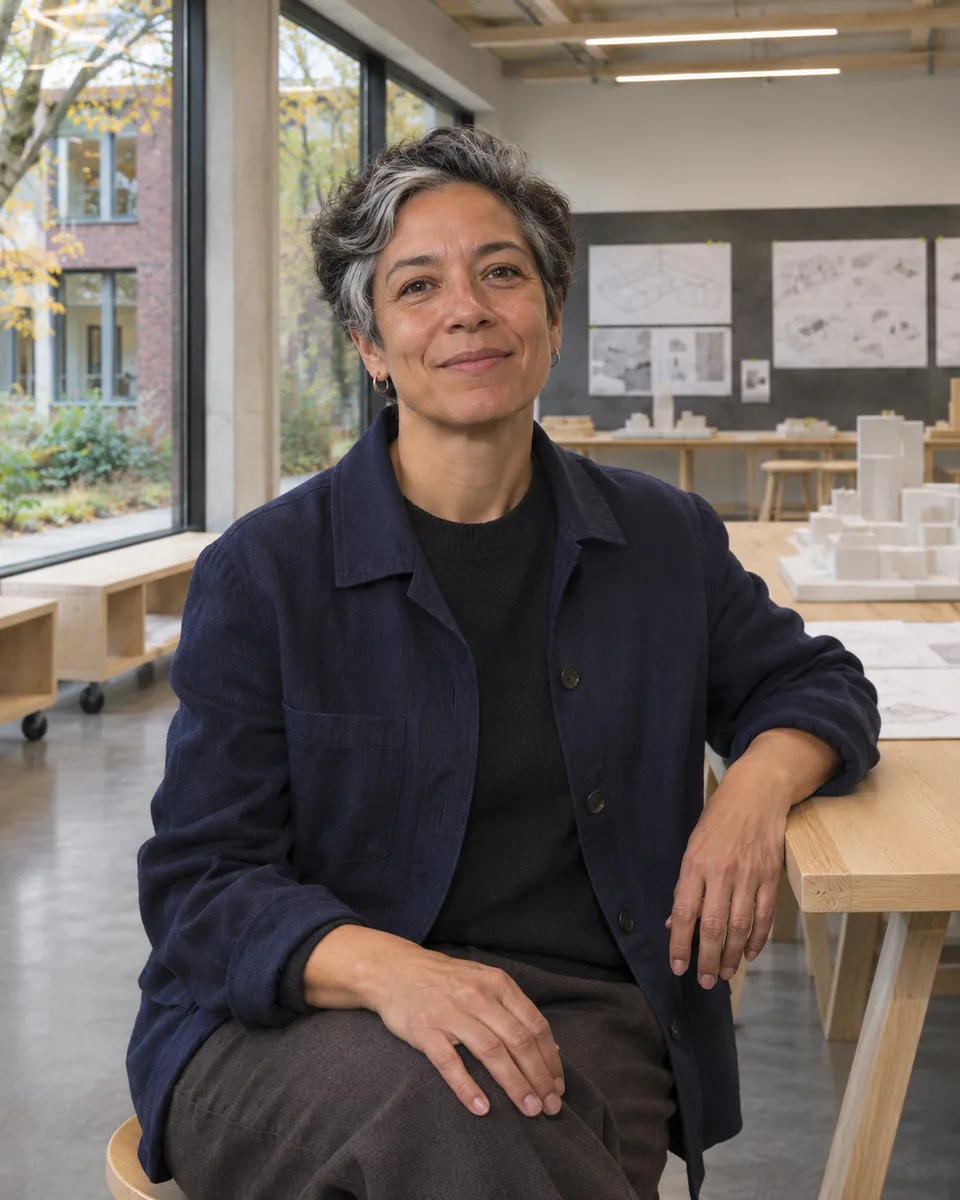
Observe closely. Make space.
Marnstead teaches students to observe a place closely, ask a useful question and make an explanation that another person can examine. A building, a room, a courtyard and a street each offer different evidence. We bring drawing, reading, models and written argument together so that students can recognise those differences rather than rush toward a single impressive image. A proposal becomes stronger when its assumptions are visible and a revision can be traced to a reason. The college therefore treats the record of learning as part of the work itself. Our undergraduate mission joins shared foundations with four distinct routes. Architectural Studies considers building-scale spatial questions; Interior Environments examines arrangements and material relationships; Landscape & Place Studies works with observation across sites and seasons; Urban Place Studies develops questions through sources and competing accounts. General education gives these practices historical, social and critical context. Students learn to communicate uncertainty as carefully as a result, to credit sources and collaborators, and to recognise when a drawing cannot establish a claim. Small classes and shared resources make responsibility visible. Time in a studio must be planned alongside reading, independent work, employment, travel and rest. Access to a building never substitutes for induction, supervision or permission. Faculty explain how a task is assessed, while advisers help students understand credits and the sequence of available studios. We aim to graduate thoughtful learners who can describe what they have tested, listen to other accounts and identify the next question. These are fictional academic aims, not promises of professional accreditation, licensing, employment or authority to design a real structure.
All institutions, people, campus spaces and school relationships here are fictional. Degree names describe simulated academic study and confer no professional accreditation, licence, examination eligibility or right to approve built work. Teaching proposals are unbuilt simulations; no construction, medical or regulatory advice is provided.
An institution imagined in 1987
Tell the fictional founding story without borrowing a real institution’s accreditation or affiliations.
Questions before objects
Contrast describing an entrance with immediately styling its facade; demonstrate the observation-to-question sequence.
Revision as an accountable act
This record explains how a version log records changed assumptions, retained decisions and unresolved limits.
What the mission does not promise
The record states the academic scope and link to degree requirements, academic policies and practice guidance without a professional-licensure claim.